Vertical or Horizontal Pellet Smoker: How to Choose
A vertical pellet smoker suits batch smoking on stacked racks, while a horizontal pellet grill suits cooks who want smoking and everyday grilling. Choose the layout around your usual meals, then check rack dimensions, hopper capacity and direct-flame access.
On this page (12 sections)
- What is the difference between a vertical and horizontal pellet smoker?
- When should you choose a vertical pellet smoker?
- When is a horizontal pellet smoker the better fit?
- How much cooking space will you actually use?
- Does hopper size matter for long cooks?
- What should you measure before choosing?
- How should you set up a pellet smoker for the first cook?
- How do you manage food on stacked smoker racks?
- Which style is easier to clean and maintain?
- What mistakes lead to the wrong pellet smoker purchase?
- How do you choose between these three examples?
- Which pellet smoker layout should you buy?
A vertical pellet smoker is the better fit for batch smoking on stacked shelves, while a horizontal pellet grill suits cooks who also want everyday grilling. If steak searing matters, choose a model with direct-flame access.
Both styles burn wood pellets, so the cabinet shape doesn't decide the fuel or flavor. The useful difference is how the cooker holds your food and which cooking methods it supports.
For the broader picture, see our guide to electric and pellet smokers. Below, the choice comes down to rack fit, cooking habits, fuel capacity and the work between meals.
What is the difference between a vertical and horizontal pellet smoker?
A vertical pellet smoker uses a tall cabinet with stacked racks, while a horizontal model uses a grill-style chamber. Choose the cabinet for organized smoking batches and the grill layout for a mix of outdoor meals.
Vertical shelves let you spread smaller foods across several levels. That helps when you're making chicken pieces, sausages or several trays of food, provided you leave room for air to move.
A horizontal cooker gives you a broad cooking surface under a lid, often with an additional upper rack. It's a familiar layout for turning burgers, moving vegetables and handling food with tongs.
Neither shape guarantees better smoke flavor or more even cooking. Temperature control, airflow, food placement and how often you open the cooker all affect the result.
Think through your last few outdoor meals before comparing models. A cooker that fits your normal dinner routine is a better choice than one sized around a gathering you host once a year.
When should you choose a vertical pellet smoker?
Choose a vertical pellet smoker when smoking several foods in one session matters more than direct-flame grilling. It makes sense for planned weekend cooks, meal prep and larger smoking batches.
Who should buy the Pit Boss Navigator vertical pellet smoker?
The Pit Boss Navigator 3-Series suits cooks who want a dedicated smoking cabinet with room to organize food by shelf. Its porcelain-coated steel racks give you separate levels rather than one main grill surface.
The digital controller spans 130°F to 420°F, offering a lower starting point than the horizontal examples here. That adds flexibility for lower-temperature recipes, though foods such as jerky still need a suitable food-safety process.
Its 50 lb hopper gives long-cook planners more room to load fuel. Choose it for fewer refill interruptions, while continuing to monitor the smoker throughout the cook.
Wi-Fi and Bluetooth connect to the Pit Boss Grills app for temperature adjustment and monitoring. It also has 3 probe ports with 1 probe included, useful when you want to follow food temperature without opening the cabinet.
Skip it if direct-flame searing is your main goal. The features here favor cabinet smoking, and cooking through several shelves takes more planning than managing a single layer of food.
A cabinet also needs working room around it, especially for loading racks and reaching cleanup parts. If you like the shape but want to compare another fuel system, see our best vertical electric smokers.
When is a horizontal pellet smoker the better fit?
Choose a horizontal pellet smoker when you want one cooker for smoking and regular grill meals. The two examples below serve different priorities: varied cooking methods or direct-flame searing.
Who should choose the Traeger Pro 22?
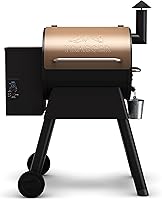
The Traeger Pro 22 suits cooks whose menus change between smoked meat, roasted chicken, baked dishes and grilled meals. It supports grilling, smoking, baking, roasting, braising and BBQ.
Its cooking space spans 2 porcelain-coated racks, and the controller runs from 180°F to 450°F. Traeger says the Digital Pro Controller maintains temperatures within plus or minus 15°F, so don't expect the chamber temperature to stay fixed at one exact number.
The 18 lb hopper provides more fuel storage than the smaller Pit Boss horizontal model. A hopper clean-out door also helps when you want to remove pellets for storage or change wood flavors.
Two wired meat probes let you follow separate foods or cuts during a cook. Keep the probes in useful positions rather than assuming every piece will finish together.
Skip it if your main reason for buying is exposed-flame searing. Choose it for its cooking range and grill-style layout, rather than expecting the flame-broiler feature offered by the next model.
Who should choose the Pit Boss 500 FB2?
The Pit Boss 500 FB2 suits cooks who want to smoke food, then finish it over direct flame. Its Flame Broiler Lever makes that cooking step the clearest reason to choose it here.
The controller adjusts from 180°F to 500°F in 5°F steps. Pit Boss says the flame broiler allows direct-flame searing up to 1,000°F, which is a separate cooking condition from the controller's maximum setting.
Its cooking area is split across 2 levels, and it has 2 meat probe ports with 1 probe included. The bottom shelf provides storage space for tools and accessories.
The 5 lb hopper calls for closer fuel planning during long sessions. It fits a cook who is happy to check and refill fuel, rather than someone choosing mainly to reduce that task.
Skip it if large smoking batches are your priority. The vertical cabinet offers more shelf space, while the Traeger provides a larger hopper in a horizontal layout.
How much cooking space will you actually use?
Choose by what fits on each rack, not total square inches alone. Added shelf area helps with smaller foods, but it can't make a narrow shelf hold a wide pan.
Start with your usual largest item: a brisket, turkey, rib rack or roasting pan. Check its length, width and height against the usable cooking space before you order.
A tall bird may require removing a rack above it. That leaves room for the bird but reduces the number of shelves available for other food.
For ribs, think about how you'll arrange them flat and reach them later. Don't assume several shelves mean every rack can hold a full slab without checking the dimensions.
Pans need breathing room too. Packing shelves edge to edge can restrict airflow, and a full pan can be harder to lift out safely than an empty one.
Allow space between pieces rather than planning to fill every inch. You'll need access to insert probes, move food and remove finished portions without disturbing the whole cook.
For a household dinner, the largest cabinet may create extra cleaning without adding useful capacity. Choose more space when you regularly cook batches, rather than simply because the total area is higher.
Does hopper size matter for long cooks?
A larger hopper means more fuel available before refilling, but it doesn't promise a fixed cooking time. Pellet use changes with the cooking temperature, weather and how the cooker operates.
Match fuel capacity to your routine. Short evening cooks make a small hopper easier to live with, while long pork shoulder or brisket sessions make refill access more important.
Running out of pellets can interrupt the fire and cooking temperature. Check the fuel level before starting, keep dry pellets ready and follow the manual's restart procedure if the fire goes out.
Don't treat a large hopper as a reason to leave the cooker unattended. App controls and probes help you follow a cook, but they don't replace checking the equipment and outdoor conditions.
Pellet storage matters as much as hopper size. Keep spare pellets dry in a closed container, and follow the manual's advice on removing fuel between cooks.
What should you measure before choosing?
Measure the cooking spot, delivery path and working space before buying. Include the manufacturer's required clearances and enough room to load food, refill pellets and clean the cooker.
For a cabinet, check overhead space and the door swing. A narrow spot is only useful if you can open the smoker fully and pull out a loaded rack.
For a horizontal grill, include handles, shelves and the open lid in your plan. You also need a safe place to set down a tray while moving food.
Check gates, corners and steps along the route from delivery to the cooking area. A unit can fit the patio while still being difficult to get there.
Plan access to suitable electrical power as well as pellet storage. Pellet cookers generally use electricity for the controller, fan and fuel feed; our guide to whether pellet smokers are electric explains that setup.
Use the cooker outdoors on a stable surface with the clearances in its manual. Never run it indoors, in a garage or in another enclosed space.
How should you set up a pellet smoker for the first cook?
Follow the model's assembly, startup and initial burn instructions before adding food. A first cook goes more smoothly when you learn the controls and cleanup layout in advance.
Check that the cooking parts, grease collection pieces and hopper components are fitted as directed. Locate the shutdown controls before you need them, and understand how the cooker handles an interrupted startup.
Use food-grade hardwood pellets intended for cooking. Wood chips, chunks and heating pellets aren't substitutes for the fuel the pellet system requires.
Complete any initial seasoning or burn-off procedure in the manual. Don't borrow temperatures or timings from a different brand, since startup and preparation steps can differ.
Start with one food at one cooking temperature. Chicken pieces or another manageable meal are easier to organize than a cabinet full of foods with different finish times.
Let the cooker reach the recipe's temperature before loading it. Place a food probe as the probe instructions direct, avoiding bone and other spots that can distort the reading.
Keep a simple note of the setting, weather, food size and result. That gives you a useful starting point for the next cook without turning dinner into a complicated project.
How do you manage food on stacked smoker racks?
Leave airflow gaps and a clear removal path around food on every level. Stacked racks add capacity, but they also create more places to check during the cook.
Place taller items where they have enough overhead room. Avoid squeezing food against the shelf above it, and make sure a loaded rack can slide out without catching another item.
Plan food placement to prevent raw juices from dripping onto food that's ready to eat. Use separate trays and clean tools when handling raw and cooked foods.
Don't assume every shelf cooks at the same pace. Check food in different positions, and move or rotate it when the recipe, manual or its progress calls for that.
Group tasks before opening the door or lid. Have your tray, gloves and tools ready so you can check food and close the cooker promptly.
Use food temperature and the recipe's doneness checks rather than the clock alone. Different cut sizes can finish at different times, even when they went into the smoker together.
Which style is easier to clean and maintain?
The easier cooker to maintain is the one with cleanup parts you can reach comfortably. Check grease access, ash removal and rack handling before choosing a location.
The Navigator has a rear-access grease drawer, so leave working room behind the cabinet. Placing it too close to a barrier can turn a simple cleaning task into a reason to move the smoker.
A hopper clean-out door serves a different job from ash removal. Emptying unused pellets doesn't clear the burned fuel or grease left inside the cooking system.
After cooking, complete the shutdown cycle and let the unit cool before cleaning. Follow the manual before disconnecting power or removing parts.
Clear grease buildup and inspect the collection area regularly. Remove ash as directed, since a clean fire area supports reliable startup and airflow.
Clean coated racks with tools and methods suited to their finish. Avoid harsh scraping that can damage the coating, and dry cleaned parts before storing them.
Protect the cooled cooker from weather and keep pellets away from moisture. Before the next session, check for debris, blocked openings and grease that needs attention.
Our guide to using a pellet smoker for the first time walks through the basic operating routine, including the steps around each cook.
What mistakes lead to the wrong pellet smoker purchase?
The biggest mistake is buying for one headline feature instead of your meals. Cooking area, maximum heat and hopper capacity each solve a different problem.
- Choosing by square inches alone: Check the size of each rack and the space above it, especially for whole poultry and large pans.
- Expecting every horizontal grill to sear over flame: Look for direct-flame access if that's how you want to finish steaks.
- Treating maximum heat as the main smoking feature: For low-and-slow cooking, usable rack space, fuel planning and food monitoring deserve more attention.
- Buying more capacity than you'll use: Extra shelves help batch cooks, but they also add parts to clean.
- Ignoring access around the cooker: Leave room for loading, refilling and reaching grease or ash areas.
- Starting with a full mixed load: Learn how one food cooks before managing several recipes with different finish times.
Also consider who will do the routine work. A cooker that one person can comfortably load, check and clean is more useful than a larger one that requires help for everyday tasks.
How do you choose between these three examples?
Choose the Navigator for smoking batches, the Traeger Pro 22 for varied outdoor meals, or the Pit Boss 500 FB2 for direct-flame finishing. Use those priorities to narrow the choice before comparing smaller conveniences.
Pick the Navigator if you regularly prepare several foods for later meals or a gathering. Confirm the rack dimensions first, then plan how you'll use the shelves without crowding them.
Pick the Traeger if you want a grill-style cooker for changing menus and value more hopper room than the smaller horizontal example provides. It fits a routine that moves between smoking, roasting and other outdoor cooking.
Pick the 500 FB2 if searing after smoking is central to your meals. Accept the smaller fuel reserve as part of that choice and build hopper checks into longer sessions.
If none matches your needs, compare our best pellet smokers guide. If you're still deciding between wood pellets and a different heating system, read electric smoker vs pellet smoker.
Which pellet smoker layout should you buy?
Buy a vertical pellet smoker when you'll regularly use stacked shelves for smoking batches. Buy a horizontal pellet grill when most meals call for a broad cooking surface, and require direct-flame access if searing is a priority.
Before ordering, confirm that your largest food or pan fits and that you can reach every loading and cleanup area. Those checks matter more than unused cooking space or a temperature setting your recipes never need.
Once you've chosen, read how to use a pellet smoker and plan one manageable first meal.
Frequently asked questions
Is a vertical or horizontal pellet smoker better?
A vertical pellet smoker is better for batch smoking across stacked racks, while a horizontal pellet grill suits a mix of smoking and grilling. Choose around your regular meals, then check individual rack dimensions and fuel capacity; if you want direct-flame searing, look for that feature rather than relying on shape.
Do vertical pellet smokers use less space?
A vertical pellet smoker can fit more cooking shelves above a smaller floor area, but compare actual dimensions before buying. Include the required clearances, door swing and room to load food; you also need access to the hopper and cleanup parts, so cabinet width alone isn't enough.
Can you grill on a vertical pellet smoker?
Choose a vertical pellet smoker mainly for smoking unless its design specifically supports the grilling method you want. A high temperature setting doesn't create direct-flame access; among these examples, the horizontal Pit Boss 500 FB2 provides a flame broiler for searing, making it the clearer choice for that job.
Which pellet smoker is easier for a beginner?
The easiest pellet smoker for a beginner matches the meals they already cook and has controls and cleaning access they understand. A horizontal grill feels familiar for mixed outdoor meals, while a vertical cabinet helps organize smoking batches; start with one simple cook before filling every rack with different foods.