Electric and Pellet Smokers: A Complete Guide
An electric smoker suits cooks who want a cabinet for low-and-slow cooking with wood chips. Choose a pellet smoker designed for grilling if you also want higher heat or direct flame searing.
On this page (11 sections)
- How does an electric smoker work?
- How does a pellet smoker work?
- Electric smoker vs pellet smoker: what changes in daily use?
- How do you choose the right electric smoker size?
- Which controls and features are worth choosing?
- Which wood fuel should you buy?
- How should you set up a smoker for the first cook?
- Which common smoker mistakes should you avoid?
- How much cleaning and care does a smoker need?
- Can you use an electric smoker or pellet smoker in cold weather?
- Which electric smoker or pellet smoker should you choose?
An electric smoker is a good choice if you mainly want to smoke ribs, pork, poultry, or other foods in a rack-based cabinet. Choose a pellet smoker designed for grilling if you also want to cook burgers, roast at higher heat, or sear over a flame.
Start with the meals you'll cook most often, then check food fit, outdoor space, fuel handling, and cleanup. The useful difference is what each cooker lets you do on a normal weekend.
This guide explains those choices through 3 cookers and a wood-chip assortment. For a focused side-by-side choice, see our electric smoker and pellet smoker comparison.
How does an electric smoker work?
An electric smoker uses a heating element for cooking heat and wood chips for smoke. The controller regulates the element, while chips in a tray or loader supply wood flavor.
That separates heat from smoke fuel: adding more chips isn't how you raise the cooking temperature. It also means you can run out of chips while the cabinet continues heating.
Most vertical designs stack food on removable racks. This suits batches of smaller cuts, but a tall roast may require taking a rack out and giving up some of the total cooking area.
Digital controls reduce the need to manage a fire by hand. You still need to check food temperature, watch the chip supply, and keep grease from building up.
EAST OAK electric smoker: who should choose it?
The EAST OAK suits family batches and cooks who want a built-in meat probe. Its viewing window also lets you check the cabinet without opening the main door, though it can't tell you whether food is done.
Four removable racks give you options for arranging separate cuts or making room for taller food. Think of them as adjustable space, rather than a promise that every rack can stay in place for every meal.
EAST OAK claims longer smoking sessions per chip load. Don't turn that into a fixed refill schedule, since the amount of smoke you want and the way you run the cooker still matter.
The brand also says the smoker switches to keep-warm mode when the target time is reached. That timer-based change isn't proof that the center of a large roast has reached a safe temperature.
Skip this model if your main goal is direct grilling. Also skip choosing it on total cooking area alone if you regularly cook long racks of ribs or unusually large cuts; usable rack dimensions decide the fit.
Masterbuilt digital electric smoker: who should choose it?
The Masterbuilt suits cooks who want digital time and temperature controls with a straightforward cabinet layout. Choose it for dedicated smoking rather than as an all-purpose backyard grill.
Its roughly 710 sq in of cooking area is spread across chrome-coated racks, and its temperature setting reaches 275°F. A removable rear grease tray gives you a separate part to empty and clean after cooking.
That layout makes sense for someone preparing several cuts at smoking temperatures. The small difference in total cooking area between this cabinet and the EAST OAK shouldn't decide the choice by itself.
Choose around the features you'll use: the EAST OAK's probe and window, or the Masterbuilt's time and temperature controls with removable grease and water parts. Neither cabinet replaces a grill for direct flame cooking.
Skip the Masterbuilt if high-heat cooking is central to your plan. If you want to watch meat temperature without opening the door, plan for a suitable food thermometer rather than assuming a digital control panel measures the meat.
How does a pellet smoker work?
A pellet smoker burns cooking pellets for both heat and smoke, with a controller managing the pellet feed. Most also use electricity for ignition, airflow, and controls.
The hopper holds fuel, and a feed system moves it toward the fire pot. Compared with an electric cabinet, you gain a wood-burning cooking system and take on the need to manage fuel, ash, and the fire area.
Our guide to whether pellet smokers are electric explains why an outdoor power connection still matters. A hopper full of pellets doesn't make a typical pellet cooker independent of electricity.
Pit Boss pellet grill: who should choose it?
The Pit Boss suits cooks who want smoking and grilling from one cooker. Its flame broiler gives it a direct flame option that the electric cabinets here don't offer.
The controller covers 180°F to 500°F in 5°F steps, while the cooking surface has 2 tiers. It includes 1 meat probe and has 2 probe ports, so the second port doesn't mean a second probe comes with it.
Pit Boss describes direct flame searing up to 1,000°F through the Flame Broiler system. That's a separate cooking mode, not the normal temperature range for the whole chamber.
This is the better fit here if your week includes both slow-cooked pork and grilled dinners. Skip it if you want only a smoking cabinet or don't want to maintain a pellet supply and clean a fire pot.
Measure your space before choosing it for a small patio. Its body is 47 in wide and it weighs 136.6 lb, so plan where it will stay and how you'll move it before assembly.
Electric smoker vs pellet smoker: what changes in daily use?
The main change is how you manage heat and fuel. Electric cabinets heat with an element and take chips for smoke, while pellet cookers maintain a fire that needs a steady pellet supply.
| Decision | Electric cabinet | Pellet cooker |
|---|---|---|
| Heat source | Electric heating element | Burning cooking pellets |
| Smoke supply | Chips added to a tray or loader | Pellets burned as fuel |
| Food layout | Racks stacked inside a cabinet | Grates, sometimes across several tiers |
| Best reason to choose | Dedicated smoking routine | Smoking plus other cooking modes, if supported |
| Fuel task | Add chips as needed | Keep the hopper supplied |
| Main cleanup tasks | Racks, grease parts, chip residue | Grates, grease path, ash, fire area |
| Power planning | Suitable outdoor electrical supply | Usually needs outdoor power as well as pellets |
The table describes common designs, so match it to the actual cooker. A pellet model isn't automatically able to sear, and a digital display doesn't give every smoker the same controls.
Choose by cooking method before smoke strength
Choose the cooker that supports your meals before trying to predict which will produce the strongest smoke flavor. Wood choice, smoke exposure, food, and cooking method all affect the result.
For someone keeping an existing grill, an electric cabinet adds a separate place for slow cooking. For someone trying to cover both jobs with one appliance, a pellet model with the right grilling features makes more sense.
Don't expect a thick cloud throughout the cook to mean better flavor. Heavy smoke can leave food bitter, so fuel amounts and ventilation should follow the cooker's instructions.
Plan for fuel checks during long cooks
Both systems need attention during a long session. A side chip loader saves you from opening the cabinet to refill, while a hopper supplies pellets only until its usable fuel runs low.
Hopper capacity isn't a reliable cook-time promise. Temperature, weather, and the cooker itself affect consumption, so keep suitable spare fuel dry and close enough to reach safely.
A timer or digital controller doesn't remove that need. Check the cooker at sensible intervals and remain able to respond to a power problem, grease issue, or fuel shortage.
How do you choose the right electric smoker size?
Choose size by the food that must fit, then by how many portions you cook. Total square inches help compare capacity, but rack width, depth, and spacing decide whether your planned meal fits.
Write down your largest normal cook before shopping. A whole bird, a long rack of ribs, and several pork shoulders each place different demands on the same cabinet.
Measure the food space you actually need
For ribs, compare the length of the food with the usable rack dimensions. If it won't fit flat, decide whether cutting it into portions is acceptable before buying a smaller cabinet.
For whole birds and tall roasts, look at vertical clearance with a rack removed. Leave room around the food for airflow and make sure the door can close without pushing the meat against a wall.
Don't count a rack position as usable just because you can slide a rack into it. Food on the level above, a probe cable, or a tall pan may reduce the space available.
Our guide to choosing a 30 or 40 inch electric smoker explains the size trade-offs. Cabinet height alone doesn't tell you how wide the food can be.
Match batch size to your normal routine
Buy for the meals you make often, with some room for guests. A cooker chosen only for one huge holiday meal may be awkward to store and clean through the rest of the year.
Batch cooking can make stacked racks useful, especially when cuts need similar cooking conditions. Keep space between pieces rather than filling every gap, because crowding makes heat and smoke move less freely.
Mixed batches also need a food-safety plan. Arrange raw foods so drips won't contaminate foods that are ready to eat, and use separate utensils and clean trays when food comes out.
Measure the patio and the route to it
Check the cooker's footprint, door swing, required clearances, and access to its grease parts. Leave working room to remove a hot rack without backing into furniture or a wall.
Measure gates, steps, and storage access too. A cooker that fits its final spot may still be difficult to move there, especially if your plan involves carrying it between uses.
Which controls and features are worth choosing?
Prioritize usable temperature controls, food-temperature checks, and easy fuel access. Extra features help only when they remove a task you actually face.
A timer is useful for reminders and cook stages. A meat probe answers a different question: what's happening inside the food, rather than how long the cooker has been running.
Separate chamber temperature from meat temperature
The chamber setting controls the cooking environment. It doesn't tell you the temperature at the center of a thick roast, and food won't be ready at the same time just because you repeat a timer setting.
Place a food probe in the thickest part of the cut, away from bone and large pockets of fat. With poultry or several separate pieces, check more than one spot before serving.
Use the safe minimum internal temperature chart from FoodSafety.gov for doneness guidance. Some barbecue cuts need further cooking for the texture you want after reaching their safety minimum.
Value easy access over frequent door opening
A side loader is useful because you can add chips while leaving the main door shut. Opening the cabinet for every refill releases heat and interrupts the cooking environment.
A window can help you see the food's position or surface color. It doesn't replace temperature checks, and smoke residue may need cleaning to keep it useful.
Removable racks and grease parts matter after every cook. Think about reaching, carrying, and washing them with your available sink space, rather than choosing only by the control panel.
Which wood fuel should you buy?
Buy the fuel your cooker is designed to use. Chips belong in compatible chip systems, while a pellet hopper needs suitable cooking pellets.
Don't use heating pellets, painted wood, treated wood, or unknown scraps for cooking. Keep fuel in a dry place so damp bags don't become a problem halfway through a meal.
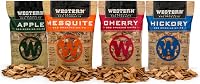
Who should choose the Western wood-chip assortment?
The Western assortment suits chip-smoker cooks who want to compare wood flavors. It includes apple, mesquite, hickory, and cherry, giving you separate choices rather than requiring a blend from the start.
Start with one wood at a time so you can learn what changes. Apple and cherry are useful starting points for a milder fruitwood direction, while hickory and mesquite suit a stronger smoke preference.
Skip this assortment as hopper fuel for the Pit Boss. Wood chips aren't a substitute for cooking pellets, even though both are made from wood.
A variety pack also makes less sense if you already know you'll use only one flavor. Our guide to wood chips for electric smokers helps match chip choice to a compatible cooker and your food.
Follow the loading instructions rather than adding extra wood
Use the chip amount and refill method described in your manual. Filling every available space with wood can create more smoke than the food needs and may interfere with normal operation.
Follow the same approach to soaking: don't add water to chips unless the cooker instructions call for it. Wet wood isn't a shortcut to better smoke, and the cooker needs its intended fuel conditions.
Keep a short note after each meal: wood used, rough smoke exposure, cut, and result. Change one factor next time so you can tell which choice helped.
How should you set up a smoker for the first cook?
Set up outdoors, check the parts, and complete the maker's preparation steps before adding food. Give the first session enough time for assembly checks, seasoning if required, and preheating.
Choose a stable, suitable surface with the clearances stated in the manual. Keep the cooker away from doors, windows, overhead hazards, and places where people will brush against hot surfaces.
Check power, parts, and grease collection
Use an appropriate outdoor electrical connection and keep plugs and controls protected as directed. Don't improvise an extension-cord setup; follow the manual's cord requirements if an extension is allowed.
Remove packaging from inside the cabinet or cooking chamber. Fit racks, drip parts, chip components, or pellet-system parts in their correct positions before switching the cooker on.
Confirm that the grease path leads into its intended tray or container. A misplaced part can turn a routine cook into grease on the patio or buildup where it shouldn't collect.
Season and preheat as directed
Seasoning prepares a new smoker for food according to its model-specific procedure. Follow the required temperature, duration, and fuel steps rather than borrowing a routine from a different design.
Our guide to seasoning an electric smoker explains the preparation stage. Don't add oil, water, or wood to parts unless the instructions call for them.
Preheat before loading cold food, and have your tools ready first. Opening the cooker repeatedly while finding racks, trays, or probe cables makes the start harder than it needs to be.
Choose a manageable first meal
Start with a simple meal and a flexible serving time. Avoid making your first use a fully packed holiday cook with several cuts that need different finishing times.
Read a complete electric smoker first-cook guide before starting a cabinet model. For a hopper-fed cooker, follow the separate pellet smoker first-use routine, including its startup and shutdown steps.
Which common smoker mistakes should you avoid?
Avoid crowding, excess smoke, and cooking by the clock alone. Those habits can spoil a meal even when you've chosen the right cooker.
Opening the door for every check
Keep the door shut unless you need to add or remove food, check a spot the probe can't measure, or perform a planned cooking step. Repeated peeking releases heat without giving much useful information.
Arrange food and probe cables before closing up. Use the side loader for chips when the cooker provides one, and group necessary checks into fewer openings.
Treating more smoke as more flavor
Add fuel in controlled amounts rather than chasing a constant thick cloud. Food can become too smoky before it reaches the texture you want.
Keep vents in their instructed positions. Closing them to trap every bit of smoke can interfere with the airflow the cooker needs.
Using water as a cure for dry meat
Use a water bowl as directed, but don't expect it to correct overcooking. The cut, cooking temperature, final internal temperature, and rest all affect the result.
Plain water also makes a simple starting point when the manual calls for a filled bowl. Focus on learning the cooking process before adding liquids that bring extra cleanup.
Serving by time instead of checking the food
Use recipe times to plan, then measure doneness. Cut size, starting temperature, cabinet load, and weather can change when a meal finishes.
Don't assume every piece on a rack finishes together. Remove ready portions to a clean tray while the remaining food continues cooking, and keep raw-meat tools separate.
How much cleaning and care does a smoker need?
Clean food-contact parts and grease collection areas regularly, then handle ash and deeper cleaning as the manual directs. A smoker needs more care than emptying its fuel tray.
Let it cool fully before cleaning, and disconnect power at the correct point in its shutdown process. Pellet cookers may need a powered shutdown cycle, so don't simply pull the plug to end a cook.
After each electric-smoker cook
Remove food debris and clean racks, water parts, and grease trays as instructed. Check that drains and grease paths remain clear before the next session.
Protect the heating element, controls, and electrical connections from water. Don't hose down the cabinet or scrape delicate surfaces with tools that could damage them.
Our guide to cleaning an electric smoker covers a practical care routine. A darkened interior isn't a reason to leave loose residue, old grease, or dirty food-contact surfaces in place.
After each pellet-cooker session
Check the grease collection system and clean cooking surfaces once safe to handle. Inspect the fire area for ash on the schedule in your manual, especially before a long cook.
Follow the approved ash-removal method and make sure everything is completely cold. Don't leave damp pellets in storage areas where they can swell or break down.
Once the cooker is cool and dry, protect it from weather as directed. Leave it ready for inspection next time rather than closing it away with wet parts or food scraps inside.
Can you use an electric smoker or pellet smoker in cold weather?
Cold-weather use depends on the model's instructions and safe outdoor conditions. Expect slower preheating and allow more time to cook without assuming the normal schedule will hold.
Keep ventilation clear and monitor food temperature. Don't turn the controller higher simply to chase lost time unless the recipe and cooker support that change.
Never move an outdoor smoker into a garage, shed, or other enclosed space to escape the weather. Electricity as the heat source doesn't make a smoking cabinet suitable for indoor use.
Rain and snow also affect electrical safety and fuel storage. Postpone the cook when you can't keep the equipment within its permitted weather conditions.
Our guide to using an electric smoker in cold weather explains the planning steps. Shelter from wind must still preserve the required airflow and clearances.
Which electric smoker or pellet smoker should you choose?
Choose an electric smoker for dedicated cabinet smoking, and a pellet cooker with grilling features when you want one appliance for more cooking methods. Then narrow the choice by food fit and the maintenance routine you'll keep.
- Choose the EAST OAK if a built-in meat probe and viewing window will help your batch-cooking routine.
- Choose the Masterbuilt if you want digital time and temperature controls for smoking and value removable grease and water parts.
- Choose the Pit Boss if grilling and direct flame searing belong on the same appliance as your slow cooks.
- Choose the Western chips only as an accessory for a compatible chip smoker, especially if you're still finding your preferred wood flavor.
Before ordering, settle 3 questions: does your largest normal meal fit, can the cooker operate safely in your outdoor space, and will you keep up with its fuel and cleanup needs? Those answers matter more than a small difference in total cooking area.
Use the electric smoker and pellet smoker comparison if the fuel system is still the deciding point. Once you've chosen the type, compare best electric smokers for home cooks or best pellet smokers to narrow your shortlist.
Frequently asked questions
What is the main difference between an electric and pellet smoker?
An electric smoker uses a heating element for heat and wood chips for smoke. A pellet smoker burns pellets for both jobs, usually with electricity running its controls and feed system; choose around your cooking plans: cabinet smoking, or a pellet cooker that also supports grilling.
Are pellet smokers electric?
Most pellet smokers need electricity for their controls, ignition, fan, and pellet feed, but burning wood pellets supplies the cooking heat. That makes them different from electric smokers, which heat with an electric element; plan for both a suitable outdoor power connection and a supply of dry cooking pellets.
Can an electric smoker grill food?
A vertical electric smoker is built mainly for smoking, so don't choose one as a replacement for a direct-heat grill. Some pellet cookers handle both jobs; the Pit Boss 500 FB2 includes a flame broiler for direct flame searing, making it the grilling option among the cookers covered here.
Which smoker is easier for a beginner?
An electric cabinet is a good starting point if you mainly want smoked food and a routine based on setting heat and adding chips. A pellet cooker makes sense if you'll also grill; both need temperature checks, fuel attention, grease cleanup, and safe outdoor placement during every cook.
Do electric smokers use wood chips or pellets?
Electric cabinet smokers commonly use wood chips, while pellet smokers feed cooking pellets from a hopper. Follow the fuel instructions for your exact cooker rather than swapping fuels based on appearance; pellets, chips, and chunks behave differently, and a fuel that fits inside a tray may still be unsuitable.