Z Grills vs Traeger: Which Pellet Grill Fits Your Cooks? (November 2026)
For Z Grills vs Traeger, choose the Traeger Pro 22 for larger batches and its 18 lb hopper. Choose the Z Grills ZPG-450A2 for regular family meals with a folding shelf, rain cover and PID controller.
On this page (9 sections)
- Z Grills vs Traeger: which fits your usual meals?
- Which controller and heat range match your cooking?
- Which hopper and extras will you use most?
- How much outdoor space and setup work do they need?
- Who should buy each grill, and who should skip it?
- How should you prepare for the first cook?
- What care habits prevent common pellet grill problems?
- Z Grills vs Traeger: side-by-side specifications
- Which grill should you choose for your next cook?
For Z Grills vs Traeger, choose the Traeger Pro 22 for larger batches and more pellet storage, or the Z Grills ZPG-450A2 for family meals with useful included extras. The right choice starts with what you cook together, how long you cook and where the grill will sit.
This comparison covers these specific models, rather than every grill from either brand. The Pit Boss 500 FB2 provides a third option for cooks who want direct flame access for searing.
Z Grills vs Traeger: which fits your usual meals?
The Traeger Pro 22 suits larger batches, while the Z Grills ZPG-450A2 suits cooks whose everyday meals fit a smaller grate. Plan around a normal weekend dinner before buying space for an occasional party.
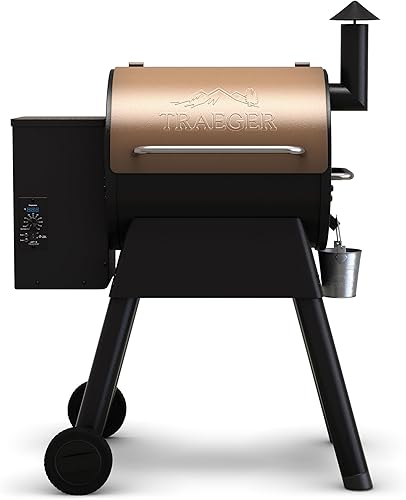
Traeger provides 572 sq in of cooking area across two porcelain-coated racks, compared with 459 sq in on the Z Grills. That gives Traeger 113 sq in more total room, about 25% more than this Z Grills model.
That extra room helps when chicken, vegetables and a pan of beans need space at once. It also gives you more freedom to separate foods that finish at different times.
For a couple cooking a few portions, spare grate space may add little value. The Z Grills shelf could be more useful during every meal than room you fill only a few times a year.
Z Grills vs Traeger for ribs and large cuts
Check the main grate's shape before choosing by total area. An upper rack adds capacity, but it doesn't make the lower rack wider or create more clearance above a tall roast.
Think through your largest cut, the pan beneath it and any sides you want to cook. Leave gaps around food so heat and smoke can move, rather than packing every available inch.
The Pit Boss offers 518 sq in across a two-tier cooking surface. Consider it for its cooking style first, rather than choosing it simply because its total area falls between the other two.
Which controller and heat range match your cooking?
The Z Grills emphasizes automatic fuel and airflow adjustment, while Traeger provides a stated temperature range and control tolerance. Choose around the meals you want to make, rather than treating a controller name as the whole decision.
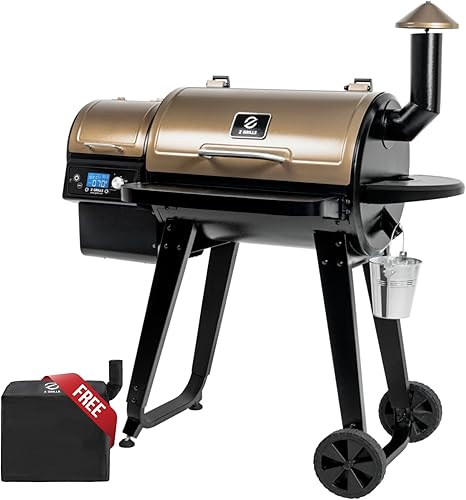
Z Grills uses a PID V3.0 controller and a large LCD screen. Z Grills says the controller auto-tunes fuel and airflow to manage cooking temperature.
The Traeger Digital Pro Controller works from 180°F to 450°F. Traeger specifies control within plus or minus 15°F, so expect some movement around the set point rather than one fixed reading.
For slow barbecue, the useful habit is to let the grill settle before making changes. Repeatedly raising and lowering the setting in response to brief swings can make a cook harder to manage.
The Pit Boss offers a range of 180°F to 500°F with settings in 5°F steps. Those steps describe how you select a target, rather than a promise that the chamber stays within 5°F of it.
Its Flame Broiler Lever opens direct flame access, with Pit Boss claiming searing temperatures up to 1,000°F. That makes it the clear alternative here if a direct flame finish is central to your steak routine.
Neither a high set point nor a controller label tells you when dinner is done. Use internal food temperature and the right doneness cues for the cut, rather than judging by the grill display alone.
Which hopper and extras will you use most?
The Traeger's larger pellet supply helps with long sessions, while the Z Grills shelf and cover help with serving and storage. Match these features to the part of outdoor cooking that needs the most help.
The Pro 22 has an 18 lb hopper and a clean-out door. The door is useful when switching pellets or preparing the grill for storage, without needing to scoop everything out from the top.
The Z Grills includes a folding shelf, a rain cover and one meat probe. A nearby shelf gives you somewhere to put a tray while opening the lid, though raw and cooked food still need separate clean surfaces.
Traeger includes two wired meat probes. These help when monitoring separate cuts, especially if one sits on a different rack or needs to come off earlier.
The Pit Boss has two probe ports and includes one probe, plus a solid bottom shelf. Its 5 lb hopper calls for more frequent checks during extended cooks than the Traeger's.
Hopper capacity is not a guaranteed runtime. Temperature, weather and how often you open the lid affect pellet use, so check the fuel supply before a long session and keep dry pellets nearby.
Confirm the Z Grills hopper capacity before ordering if refill planning will decide your choice. Don't judge a grill's fuel storage from its overall size.
How much outdoor space and setup work do they need?
The Traeger is narrower overall than the Z Grills, despite offering more cooking area. Measure the outdoor location and the route to it before deciding which grill fits.
The Z Grills measures 28 in deep, 45 in wide and 49 in high. Traeger measures 27 in deep, 41 in wide and 49 in high.
The Pit Boss measures 26.7 in deep, 47 in wide and 47.2 in high. These dimensions are only the starting point, since you also need the clearances required by each manual.
Allow space to open the lid, stand at the controls and use shelves without blocking a walkway. A grill that fits tightly between walls or furniture may still be unsuitable for that location.
Z Grills weighs 84 lb, compared with about 102.5 lb for Traeger and 136.6 lb for Pit Boss. Plan for help during assembly and placement, especially if your route includes steps or uneven ground.
Z Grills rolls on its right wheels when you lift the left side, then rests on its left legs. Traeger has large wheels, a side lift bar and a sawhorse chassis.
Wheels help with repositioning on a suitable surface, but these are substantial backyard grills. Skip all three if your plan involves carrying the grill up stairs after every meal.
Pellet grills need electricity to run their controls and feed system, as explained in how pellet smokers use electricity. Plan a suitable outdoor power connection and keep cords away from hot surfaces and foot traffic.
Use the grill outdoors in an open area, following the manual's placement rules. A rain cover is for a cooled grill in storage, not a way to cook through rain.
Who should buy each grill, and who should skip it?
Buy Traeger for batch cooking, Z Grills for everyday meal prep, and Pit Boss for direct flame finishing. The best fit depends on the feature you will use regularly.
Traeger Pro 22: for hosts and batch cooks
Choose the Pro 22 if you often cook a main dish and several sides together. It also suits meal prep, where spreading portions out can reduce the need to cook in separate batches.
The pellet storage and clean-out door suit cooks who plan longer sessions and want a straightforward way to empty the hopper afterward. Its larger cooking area earns its place when you use that room often.
Skip it if you usually cook small portions and already have all the room you need. Also skip it if direct flame searing is a firm requirement.
Z Grills ZPG-450A2: for regular family dinners
Choose the Z Grills if your meals fit its grate layout and you want a nearby place for tools and trays. The included cover also gives you a storage accessory from the start.
Its controller suits cooks who want automatic heat management while they focus on food preparation. You still need to monitor fuel, food temperature and grease buildup.
Skip it if large mixed menus already crowd your current grill. Don't assume its smaller cooking area makes it the better choice for a narrow patio.
Pit Boss 500 FB2: for cooks who want a flame finish
Choose the Pit Boss if you want to smoke food and then use direct flame as part of the same cooking session. That feature gives it a distinct role beyond this two-brand comparison.
Skip it if your main goal is long cooking sessions with fewer fuel checks. Its weight also makes it a poor match for frequent moves between storage and a cooking area.
For another model comparison, read Traeger vs Pit Boss. You can also browse our brands and models guides if none of these fits your routine.
How should you prepare for the first cook?
Assemble fully, follow the initial burn procedure and start with a simple meal. Learning the startup and shutdown steps matters more than filling every rack on day one.
Read the manual before adding pellets, and remove packing materials from the cooking chamber. Confirm that grates, grease parts and other removable pieces sit in their proper positions.
Use food-grade pellets intended for pellet grills. Store them in a dry, sealed container, since damp pellets can swell and break apart.
Follow the model's instructions for priming the feed system and completing its first burn. Don't improvise the sequence or load food before the required preparation is complete.
For the first meal, choose one main food with a clear internal temperature target. A complicated menu makes it harder to learn how loading food and opening the lid affect the cook.
Place a meat probe in the thickest part of the food, avoiding bone and large fat pockets. Keep its cable clear of flame and use the probe within its stated limits.
Our first-time pellet smoker instructions walk through the cooking process. If you're still deciding which controls suit you, see our pellet smokers for beginners.
What care habits prevent common pellet grill problems?
Keep pellets dry, grease paths clear and ash under control. These habits support steady operation and make the next cook easier to start.
After cooking, follow the prescribed shutdown cycle rather than unplugging the grill immediately. Wait until it is fully cool before cleaning or covering it.
Clean grease from the tray and drain path at the intervals in the manual, with extra attention after fatty foods. A clear drain matters more than leaving the outside spotless.
Remove ash from the firepot as directed by the manufacturer. If a vacuum is permitted, use it only on fully cold ash with equipment suited to that job.
Check grates before loading food and remove loose residue. Keep probe tips clean, while protecting plugs and electrical connections from water.
Avoid leaving pellets exposed to damp conditions between infrequent cooks. Use the hopper-emptying procedure in the manual, and protect stored fuel as carefully as the grill itself.
Don't keep adding pellets after a failed ignition or repeatedly restart without checking the manual. An ignition problem needs the proper recovery steps before another attempt.
Open the lid with a purpose. Repeated checks release heat, while overcrowding makes it harder to move food or monitor several cuts safely.
Z Grills vs Traeger: side-by-side specifications
The table shows the main buying differences, including cooking area, controller and included extras. Use it to confirm your shortlist after deciding how and where you will cook.
| Product | Best for | Cooking area | Controller | Included extras | Our score |
|---|---|---|---|---|---|
| Traeger Pro 22 Pellet Grill | bigger cookouts | 572 sq in | Digital Pro | 2 wired meat probes | 8.2 |
| Z Grills ZPG-450A2 Pellet Grill | family dinners | 459 sq in | PID V3.0 | Meat probe, folding shelf and rain cover | 8.1 |
| Pit Boss 500 FB2 Pellet Grill | steak nights | 518 sq in | LCD digital | 1 meat probe | 7.9 |
Keep accessories in perspective when comparing offers. A shelf matters if you need a landing spot, while an extra probe matters if you regularly cook separate cuts.
Our scores place Traeger slightly ahead for batch cooking and fuel storage, with Z Grills close behind for its controller and included equipment. Pit Boss serves a different priority through direct flame access, balanced against its smaller hopper and greater weight.
For more options beyond these models, see our guide to the best pellet smokers.
Which grill should you choose for your next cook?
For Z Grills vs Traeger, pick the Pro 22 if you regularly run out of cooking room or plan long barbecue sessions. Pick the ZPG-450A2 if your normal dinner fits comfortably and you'll use the shelf and cover often.
Before ordering, write down one typical meal, one meal for guests and the space available outdoors. Choose the grill that handles those meals without crowding and fits the required clearances.
Consider the Pit Boss instead when direct flame finishing is essential to how you cook. If you're unsure whether pellet cooking suits you at all, read electric smoker vs pellet smoker before committing.
Frequently asked questions
Is Z Grills as good as Traeger?
The Z Grills ZPG-450A2 is a good fit for family meals and buyers who will use its folding shelf and included cover. Choose the Traeger Pro 22 for larger batches and more pellet storage; this comparison covers these specific models, so use their features rather than the brand name alone.
Does the Z Grills ZPG-450A2 have enough cooking space?
Its 459 sq in cooking area suits meals that fit without crowding, but total area is only part of the decision. Check the main grate dimensions against your largest cut and roasting pan; leave room around food for airflow, and consider sides that need to cook alongside the meat.
Which pellet grill has the larger hopper?
The Traeger Pro 22 has an 18 lb hopper, compared with 5 lb on the Pit Boss 500 FB2. Confirm the Z Grills ZPG-450A2 hopper capacity if long sessions drive your choice; hopper size affects refill planning, but cooking temperature and weather also affect how quickly pellets burn.
Can the Z Grills grill sear over direct flame?
Choose the Pit Boss 500 FB2 if direct flame searing is a requirement among these options; its Flame Broiler Lever provides direct flame access, and Pit Boss claims searing temperatures up to 1,000°F. Don't assume that the Z Grills ZPG-450A2 offers the same feature simply because it is a pellet grill.