5 Best Electric Smokers for Beginners (November 2026)
The best beginner electric smokers include the EAST OAK 30 Electric Smoker for food temperature tracking, the Masterbuilt 30 Digital Electric Smoker for families cooking several foods, and the Masterbuilt 30 Analog Electric Smoker for simple dial control.
On this page (8 sections)
- The best electric smokers for beginners, matched to your cooking plans
- Which controls make an electric smoker easier to learn?
- How much cooking space does a beginner need?
- Do side chip loaders make smoking easier?
- What should you check before your first cook?
- Which beginner mistakes are easiest to avoid?
- How do you keep an electric smoker ready for the next cook?
- Which electric smoker for beginners should you choose?
The EAST OAK 30 Electric Smoker is our top electric smoker for beginners because its digital controls, food probe and side chip loader cover the main jobs of a first cook. Choose it if you want a cabinet for regular family meals and occasional larger batches.
Your best choice depends on what you'll cook and where the smoker will sit. A shorter tabletop cabinet solves a different problem from a dial-controlled smoker, while a fixed-temperature model serves a much narrower cooking routine.
GladlyNest compared control styles, food-temperature tracking, usable cooking space and chip access. Those differences matter more to a new cook than buying the largest cabinet available.
For a step-by-step plan, see our guide to using an electric smoker. If you're still choosing a cooking system, start with our overview of electric and pellet smokers.
Our picks at a glance
-
1

-
2
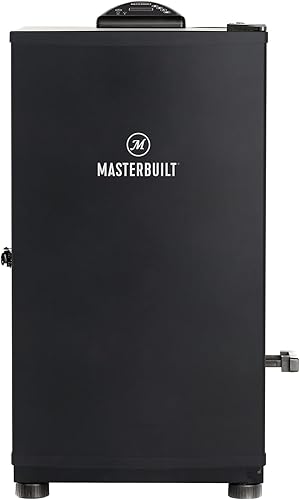 Best for families cooking several foods
Masterbuilt 30 Digital Electric Smoker
8.4/10 our score
See it on Amazon -
3
 Best for simple dial control
Masterbuilt 30 Analog Electric Smoker
7.9/10 our score
See it on Amazon
- 4
 Check it
EAST OAK Pitmate Tabletop Smoker
Best for tabletop patio setups - 5
 Check it
Smokehouse Big Chief Electric Smoker
Best for cooks following low-temperature smoking recipes
The best electric smokers for beginners, matched to your cooking plans
The EAST OAK 30 offers the most useful combination here for a beginner who wants adjustable cooking and built-in food tracking. The alternatives make sense when your priority is a dial, a raised outdoor setup or a specific low-temperature process.
Read the comparison as a guide to daily use. A smoker with fewer settings can feel simple at first, but the right settings may save you from juggling extra timers and repeated temperature checks.
| Product | Best for | Cooking area | Controls | Chip loading | Our score |
|---|---|---|---|---|---|
| EAST OAK 30 Electric Smoker | food temperature tracking | 725 sq in | Digital time and temperature | Side loader | 9.0 |
| Masterbuilt 30 Digital Electric Smoker | families cooking several foods | 711 sq in | Digital time and temperature, up to 275°F | Side loader | 8.4 |
| Masterbuilt 30 Analog Electric Smoker | simple dial control | 535 sq in | Analog temperature dial, up to 275°F | Removable tray | 7.9 |
| EAST OAK Pitmate Tabletop Smoker | tabletop patio setups | 544 sq in | Digital timer and temperature, up to 275°F | Large side loader | 7.4 |
| Smokehouse Big Chief Electric Smoker | cooks following low-temperature smoking recipes | Removable chip pan | 7.2 |
EAST OAK 30 Electric Smoker: Best for food temperature tracking
- Digital time and temperature controls
- Built-in meat probe
- Side chip loader
- 725 sq in cooking area
Choose this model if you want to set the cooking conditions and track food temperature from the same smoker. Side chip access keeps refills separate from opening the food chamber.
Pros
- Built-in probe tracks food temperature
- Chips load without opening the main door
- Four removable racks accommodate different food heights
Cons
- Needs a planned outdoor cabinet location
- Weighs 52.3 lb
Choose the EAST OAK 30 if you want to learn smoking while keeping chamber settings and food temperature easy to follow. Its built-in probe helps separate two questions beginners often mix up: how hot the smoker is and how far the food has cooked.
The cabinet provides 725 sq in across 4 removable racks. Removing a rack creates room for a taller cut, although that also reduces the shelf space available for other food.
The viewing window gives you a way to look inside without opening the door. Use temperature readings and your recipe to decide when to act, since color through the glass won't tell you whether the center is ready.
EAST OAK includes a timed switch to keep-warm mode. Check doneness before relying on that change, and plan serving around appropriate food-holding guidance.
Skip this model if moving a substantial cabinet in and out of storage would make smoking a chore. It's also more capacity than you need if nearly every cook will be a few small portions.
Masterbuilt 30 Digital Electric Smoker: Best for families cooking several foods
- Digital time and temperature controls
- Side wood chip loader
- 711 sq in cooking area
- Four chrome-coated racks
This Masterbuilt suits family batches spread across several shelves. Digital settings and side chip loading help you manage the chamber while you follow food doneness with a separate thermometer.
Pros
- Digital temperature and time settings
- Four racks for separate batches
- Removable rear grease tray
Cons
- Larger cabinet footprint than the EAST OAK 30
- Plan for a separate food thermometer
Choose the Masterbuilt 30 Digital for family cooking when you want several shelves and clear time and temperature settings. Its 711 sq in of cooking space is close to the larger EAST OAK's total, so the small area difference shouldn't drive your decision.
The 4 chrome-coated racks let you separate batches rather than crowd everything onto one shelf. Leave space around the food and arrange it so raw juices can't drip onto food that's ready to eat.
The controls reach 275°F, and a side loader handles wood-chip refills. That combination suits a beginner following conventional low-and-slow recipes without tending a separate fire.
The removable water bowl and rear grease tray give you separate parts to empty and clean. Keep them accessible when choosing the smoker's location.
Buy this one if you already have, or plan to add, a food thermometer. Skip it if built-in food tracking is your main reason for choosing a digital smoker; the EAST OAK 30 better matches that priority.
Masterbuilt 30 Analog Electric Smoker: Best for simple dial control
- Analog temperature dial
- 535 sq in cooking area
- Three chrome-coated racks
- Removable wood chip tray
A temperature dial suits cooks who prefer basic controls and will manage timing separately. Choose it for ordinary family batches rather than buying extra rack space you won't use.
Pros
- Straightforward temperature dial
- Three racks for arranging food
- Removable rear grease tray
Cons
- Less cooking area than the digital Masterbuilt
- No digital cooking-time setting
Choose the Masterbuilt 30 Analog if you prefer turning a dial and managing the rest of the cook yourself. Its temperature control goes up to 275°F, without a digital cooking-time setting.
The 535 sq in cooking area is spread across 3 chrome-coated racks. That suits a smaller batch plan, but check the shape of your usual cuts before assuming that total area means everything will fit.
A removable wood-chip tray supplies smoke, and the water bowl and rear grease tray come out for cleaning. Follow the manual's refill process, including precautions around hot parts.
An analog dial doesn't remove the need to watch chamber temperature and food doneness. Make one adjustment at a time and give the chamber time to respond instead of repeatedly turning the control.
Skip this model if you want the smoker to keep track of cooking time or you strongly prefer side chip access. Choose it because you like the control style, rather than assuming fewer buttons mean fewer cooking decisions.
EAST OAK Pitmate Tabletop Smoker: Best for tabletop patio setups
- 20 in tabletop design
- 544 sq in cooking area
- Digital timer and temperature controls
- Built-in meat probe
The shorter cabinet suits an outdoor setup with a stable, approved support surface. Digital controls and a food probe give beginners useful cooking information without needing a taller cabinet.
Pros
- Shorter tabletop cabinet
- Built-in meat probe
- Side chip access
Cons
- Support surface needs suitable strength and heat clearance
- Weighs 41.5 lb
Choose the EAST OAK Pitmate when a shorter smoker works better with your outdoor cooking area. It measures 16.8 in deep, 19 in wide and 21.7 in high, so plan its support surface before ordering.
Its 3 nickel-plated racks provide 544 sq in of cooking area. The compact shape still needs door clearance, chip-loader access and room around the cabinet as directed by EAST OAK.
Digital controls include a 12-hour timer, with temperature settings up to 275°F. The built-in food probe and viewing window help you follow progress while keeping the door closed.
EAST OAK says its 1400W dual heating system can reduce cooking time by up to 25%. Plan meals around the recipe and measured doneness rather than subtracting a fixed percentage from every cook.
Skip it if your only available surface is a light folding table or if you'll need to carry it often. At 41.5 lb, this tabletop smoker needs a deliberate home rather than an improvised perch.
Smokehouse Big Chief Electric Smoker: Best for cooks following low-temperature smoking recipes
- Fixed 165°F temperature
- Five racks
- Removable wood chip pan
- Up to 50 lb meat or fish capacity
Choose this specialty smoker for a recipe built around its fixed operating temperature. For a first smoker intended for varied barbecue meals, an adjustable model is the better fit.
Pros
- Simple plug-in operation
- Five racks for batch smoking
- Chip pan access without opening the main door
Cons
- Fixed temperature of 165°F
- Unsuitable for recipes requiring a hotter chamber
Choose the Smokehouse Big Chief only when you already have a low-temperature smoking process in mind. Its fixed 165°F operating temperature makes it a specialty tool rather than the most flexible first barbecue smoker.
The simple plug-in design removes temperature-setting decisions. That is useful for a matching recipe, but it also means you can't turn up the heat when a different recipe calls for it.
There are 5 racks, and Smokehouse describes capacity as up to 50 lb of meat or fish. Treat that as a batch-capacity claim, since food thickness, spacing and rack arrangement determine your practical load.
The removable chip pan lets you add wood without opening the main door. Keep track of the food's required preparation and finishing steps rather than assuming smoke exposure completes the cooking process.
Skip the Big Chief for a broad mix of beginner barbecue recipes. Its chamber temperature alone doesn't guarantee safe doneness, and recipes for fish, sausage or jerky may require preparation or separate heating steps.
Which controls make an electric smoker easier to learn?
Digital settings are the better starting point for most beginners who want to enter a recipe's temperature and cooking time. Analog controls suit someone who prefers a dial and is comfortable managing timing separately.
Think about the whole cook rather than the first button press. You may need to preheat, load food, replenish chips, check internal temperature and finish at a different time than expected.
Digital or analog electric smokers for beginners
Choose the interface you can read and adjust easily in your outdoor location. Before buying, consider where the controls will sit relative to your standing height and whether your setup makes them awkward to reach.
A digital temperature setting is a target for the cooking chamber. It isn't a promise that every part of the chamber, or the food inside it, will stay at that exact temperature throughout the cook.
With a dial, avoid making several quick corrections because one reading looks different. Opening the door and adding cold food affect chamber conditions, so let the smoker respond before adjusting again.
Food probes and timers do different jobs
A food probe measures inside the food, while a cooking timer tracks elapsed time. A timer is useful for reminders, but it can't account for differences in thickness, starting temperature or the amount loaded.
Place a probe in the thickest part of the food, away from bone and large fat pockets. Check more than one piece when cooking a batch, since the first piece to finish doesn't prove the whole rack is ready.
A separate chamber thermometer can help you understand conditions near the food. Keep that reading distinct from the internal food reading so you don't adjust the smoker based on the wrong number.
How much cooking space does a beginner need?
Buy space for your usual meal plus airflow, rather than maximum advertised capacity. A cabinet that fits your weekly cooking is more useful than extra shelves you'll rarely fill.
Start with a short list of likely meals. A few chicken portions, a whole bird and long racks of ribs each place different demands on shelf width and vertical clearance.
Check rack shape before total area
Total cooking area adds the shelves together. It doesn't show whether one long cut fits on a single rack or how much shelf space remains after removing a rack for a tall roast.
Large batches also need gaps between pieces. Food pressed against other food or cabinet surfaces makes it harder to arrange probes, manage drips and get smoke around the load.
For occasional gatherings, cooking in stages may be more practical than sizing everything around your largest annual meal. Allow for safe holding and serving arrangements when planning that approach.
Read what size electric smoker you need for help comparing cabinet sizes. Our electric smoker guide also explains how size, controls and power affect the choice.
Measure the working space around the cabinet
The smoker's footprint is only part of the space it needs. Allow for the open door, racks sliding out, chip access and grease-tray removal, plus the manufacturer's required clearances.
Picture yourself carrying a loaded rack with both hands. A clear route and a nearby suitable landing surface make that job easier than squeezing past furniture while holding hot food.
A tabletop model needs enough usable support area for its full base. Include the support surface in your layout instead of comparing cabinet height alone.
Do side chip loaders make smoking easier?
Side chip access reduces how often you open the main chamber, which makes refills more convenient. It's useful during longer cooks, but it doesn't remove the need to follow the correct loading routine.
The EAST OAK models and digital Masterbuilt use side loaders. The Big Chief's separately accessible chip pan also allows refills without opening the food chamber, while the analog Masterbuilt uses a removable tray.
Let the manual set the chip amount and refill method. Packing in extra wood to avoid another refill can create more smoke than your food needs.
Start with a modest smoke level and record what you used. If the flavor is too strong, reducing the amount next time is easier than trying to rescue an oversmoked meal.
Don't assume wood must be added for the entire cooking time. Smoke intensity is a flavor choice, and constant refilling isn't a goal in itself.
Keep the exhaust arranged as the manufacturer directs rather than closing it to trap smoke. Our guide to wood chips for an electric smoker explains wood choices and suitable fuel.
What should you check before your first cook?
Complete placement, assembly and any required seasoning before food day. That gives you time to fix an awkward setup without a meal waiting on the counter.
Choose a safe outdoor location
Use the smoker outdoors in the location and weather conditions its manual permits. A garage, enclosed porch or indoor room isn't a substitute for an approved outdoor space.
Check access to a suitable grounded outlet and follow the manufacturer's electrical instructions. Avoid routing cords across a walking path, and use an extension cord only if the manual allows one with the required specifications.
Keep plugs, controls and connections protected from water as directed. If bad weather makes the setup unsuitable, change the cooking plan rather than improvising a cover around an operating smoker.
Check local property rules before choosing a balcony or shared outdoor area. A small cabinet still produces heat and smoke.
Assemble and season before loading food
Remove packaging, fit the racks and pans, and check that the door and chip-loading parts move correctly. Work out how the grease collection system comes apart while everything is cool.
If seasoning is required, follow the model's own sequence and duration. Our electric smoker seasoning guide explains the purpose of that first-use step.
Seasoning isn't a reason to coat every interior surface with oil. Keep coatings and other materials away from elements, probes and parts where the manual prohibits them.
Make the first meal easy to manage
Choose one food and one recipe within your smoker's temperature range. A modest batch lets you focus on the controls and probe placement without several foods reaching doneness at different times.
Have clean utensils, a tray for cooked food and a thermometer ready before loading. Keep raw-food tools separate from anything that will touch the finished meal.
Preheat as directed and load efficiently. After closing the door, give the chamber time to recover instead of changing settings immediately.
Which beginner mistakes are easiest to avoid?
The most useful habits are keeping the door closed, measuring doneness and changing one thing at a time. Those habits make each cook easier to understand and improve.
Opening the door whenever smoke looks light
Visible smoke changes during a cook, and a dramatic cloud isn't the measure of success. Use the manual's refill instructions and your flavor notes instead of opening the chamber whenever smoke becomes less obvious.
Gather what you need before a planned check. If you must open the door, check the food and handle any necessary adjustments in one brief visit.
Treating a timer as a finish signal
Food can take longer or finish sooner than a recipe estimate. Thickness, load and outdoor conditions all affect the schedule, so leave room in your meal plan.
Automatic keep-warm mode also needs attention. The Pitmate's mode is set to 120°F, so don't treat it as a safe holding plan for perishable cooked food without checking applicable food-safety guidance.
Expecting smoking heat to behave like grilling heat
Low-and-slow smoking serves a different purpose from direct high-heat grilling. Don't buy one of these smokers expecting it to replace every cooking task performed by a grill.
If your main goal includes grilling as well as smoking, read our electric smoker versus pellet smoker comparison. Choose the cooking system before choosing the cabinet size.
Changing the wood, recipe and settings together
Keep a short record of the food, seasoning, wood amount, cooking setting and result. Change one part on the next cook so you can connect the change with the flavor or texture.
A first batch doesn't need to fill every rack. Learning how one food cooks gives you a useful starting point for larger meals.
How do you keep an electric smoker ready for the next cook?
Remove food residue and collected grease after each cook, once the smoker is cool and unplugged. Regular care keeps the next session from starting with blocked trays, old scraps or dirty food-contact surfaces.
Wash removable food-contact parts according to the manual and dry them before putting them back. Empty water and grease containers rather than leaving them inside between sessions.
Wipe accessible residue gently and keep electrical parts dry. Don't spray the cabinet with a hose or use a cleaning method the manufacturer hasn't approved.
Check chip passages and vents for buildup, and remove loose flakes that could fall onto food. Treat the viewing window as another cleaning task rather than expecting it to remain clear through repeated cooks.
Before storage, make sure the smoker and removable parts are dry. Follow the manufacturer's storage instructions, especially if the cabinet will remain outdoors.
Our guide to cleaning an electric smoker covers a practical routine for racks, pans and the chamber. Keeping those parts accessible is another reason to plan the smoker's location carefully.
Which electric smoker for beginners should you choose?
Choose your electric smoker for beginners by the job you'll repeat most often. Favor a setup you'll use comfortably over extra capacity or controls that don't help your meals.
Pick the EAST OAK 30 for regular family smoking when built-in food tracking matters. Choose the Masterbuilt Digital if you want a multi-rack cabinet and are comfortable using a separate food thermometer.
Pick the Masterbuilt Analog because you prefer a dial and will manage timing yourself. Choose the Pitmate when a suitable raised outdoor surface makes its shorter shape the better fit.
Reserve the Big Chief for a specific low-temperature smoking process. For varied first meals, choose an adjustable model and start with a small, well-planned batch.
After choosing, use the first-cook guide to prepare your workspace, load the smoker and follow the food through to doneness.
Our top 3 picks at a glance
-
1
-
2
Best for families cooking several foods
Masterbuilt 30 Digital Electric Smoker
8.4/10 our score
See it on Amazon -
3
Best for simple dial control
Masterbuilt 30 Analog Electric Smoker
7.9/10 our score
See it on Amazon
Frequently asked questions
Are electric smokers good for beginners?
Electric smokers suit beginners who want electric heat without tending a charcoal fire; adjustable models let you choose the chamber temperature, while some add timers and food probes. You still need to manage wood chips, check food doneness, clean grease and follow the manual's outdoor placement instructions.
Should a beginner choose digital or analog controls?
Choose digital controls if setting temperature and cooking time on a panel feels easier; choose analog if you prefer a dial and will track time separately. Neither control style tells you that food is done, so make a food thermometer part of your setup with either choice.
What size electric smoker should a beginner buy?
Buy enough usable rack space for your usual meal, with room around each piece for airflow; check the width and height of your largest planned cut, not just total cooking area. Then measure the outdoor location, door access and required clearances before deciding between a cabinet and tabletop design.
Do electric smokers need wood chips?
These smokers use wood chips for smoke flavor, while electricity supplies heat; follow the manual for chip size, quantity and refill steps, and don't substitute pellets unless the manufacturer permits them. A side loader or separately accessible pan lets you refill without opening the main food chamber.
What should I smoke first in an electric smoker?
Start with a modest batch of one food, such as chicken pieces or a small pork roast, using a recipe suited to your smoker; keep the seasoning simple and follow food-specific doneness guidance. Our first-cook guide helps you organize setup, preheating, chip loading and temperature checks.


