How Often Should You Add Wood Chips to an Electric Smoker?
Add a small handful of chips at the start and refill roughly every 30 to 60 minutes, keeping thin blue smoke going for the first 2 to 3 hours of the cook. After that, most meats have taken on enough smoke and you can stop adding chips.
On this page (7 sections)
- How often should you add wood chips to an electric smoker?
- How many chips should go in each load?
- What does good smoke look like, and when should you stop adding chips?
- Why does refill timing change from cook to cook?
- Which wood chips suit an electric smoker?
- How do you keep a steady smoke without overloading the tray?
- What's the simple rule for refilling wood chips?
Add a small handful of chips at the start and refill roughly every 30 to 60 minutes, keeping thin blue smoke going for the first 2 to 3 hours of the cook. After that, most meats have taken on enough smoke and you can stop adding chips.
Chip size, how wet they are and the temperature you set all change the burn, so you watch the smoke rather than the clock. This guide gives you a starting rhythm and the signs that tell you when to top up.
How often should you add wood chips to an electric smoker?
Refill about every 30 to 60 minutes while you want smoke, starting with a small load when you put the meat in. A typical electric smoker burns a light load of chips in under an hour, so the tray goes quiet sooner than most new owners expect.
The first load matters most. Put in about 1/2 cup, or a small handful, and let the element heat it until smoke drifts from the vent.
Once that smoke thins to almost nothing, it's time for the next small load.
Don't wait for the tray to look empty. Chips turn to ash and char long before the tray is bare, and the useful smoke is gone well before that.
Watch the vent, not the chip pan, and refill when the stream fades.
If you're unsure how the tray loads and heats in your unit, our walkthrough of how to use an electric smoker with wood chips covers the setup step by step.
How many chips should go in each load?
Use about 1/2 cup per load and never fill the tray to the top. A small load heats fast, smolders cleanly and lets you control how much smoke the meat gets.
A packed tray is the most common mistake. When chips are stacked deep, the ones at the bottom can't get enough air and heat, so they smolder slowly and throw thick white smoke.
That smoke leaves a bitter, sooty taste on the bark.
Keep the load loose enough that you can see gaps between chips. If your smoker has a chip loader tube, drop the chips in without tamping them down.
A level tray that's half full beats a heaped one every time.
Small loads also make it easier to switch flavors partway through a cook. You can finish a pork shoulder on apple after starting on hickory, and the change stays clean instead of muddled.
What does good smoke look like, and when should you stop adding chips?
Thin, faintly blue smoke means the chips are working; thick white or gray smoke means you're adding too much. The color of the smoke is the best signal for when to top up and when to stop.
Thin blue smoke carries flavor without soot. When the vent stream gets wispy and almost invisible, that's your cue to add another small load.
If the smoke turns billowy and white, hold off and let the tray settle before adding more.
Stop adding chips once the meat has a good bark and the smoke has done its job. For most cooks that's 2 to 3 hours in.
After that, the meat is mostly taking on heat, and extra chips just burn fuel and build up creosote.
Poultry and fish take on smoke quickly, so 1 to 2 hours is often plenty. Big cuts like brisket or pork butt can handle a bit longer at low heat.
Let the meat's color and bark guide you more than a fixed count.
Why does refill timing change from cook to cook?
Chip size, moisture and cooking temperature all shift how fast a load burns. Two smokers set to the same temperature can need different refill schedules with the same bag of chips.
Larger, thicker chips take longer to start smoking and burn more slowly, so they stretch the gap between refills. Small, dry chips catch fast and burn out quickly, which means more frequent small loads.
Wet or soaked chips smolder longer but release more white smoke at the start. If you soak, drain them well and expect the first few minutes to look heavy before the smoke settles down.
Higher cooking temperatures burn chips faster. A 225°F cook stretches each load, while a 275°F or 300°F cook will burn through the same amount in less time.
Cold weather also pulls heat from the cabinet, so the element runs harder and can char chips sooner; our guide on whether you can use an electric smoker in the winter explains how to adjust.
Which wood chips suit an electric smoker?
Choose chips sized for a smoker tray and pick flavors that match the meat. The right chip makes clean smoke easier to manage and gives you more control over refill timing.
Chip size matters in an electric smoker because the tray is small. Oversized chunks may not fit or heat evenly, while very fine chips can fall through the tray and burn too fast.
A mid-sized chip that sits level in the pan is the easiest to work with.
Flavor comes down to the meat. Hickory and mesquite bring bold smoke that suits beef and pork, while apple and cherry are milder and work well on poultry and fish.
A variety pack lets you try several without buying full bags of each.
Our guide to wood chips for electric smoker compares the common types and what each one suits.
Which chip pack fits most electric smokers?
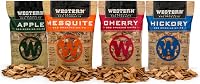
The Western BBQ Smoking Wood Chips Variety Pack bundles four flavors, so you can match the chip to the meat without buying separate bags. It includes apple, mesquite, hickory and cherry, and comes as a 16-ounce variety pack.
The four-flavor setup suits a cook who smokes chicken one weekend and brisket the next. Because each bag is small, you can finish a flavor before it goes stale.
Skip it if you only ever smoke one type of meat; a single-flavor bag takes up less shelf space.
Which pack suits cooks who want bigger bags?
The Mr. Bar-B-Q Wood Chips for Smoker three-pack gives you hickory, apple and mesquite in 1.8 lb bags, 5.4 pounds in total.
The bigger bags mean fewer restocks if you smoke often and go through chips quickly.
The three flavors cover the most common pairings: hickory for ribs and brisket, apple for pork and poultry, mesquite for beef and game. Mr.
Bar-B-Q says the chips are all natural with no additives, which keeps the smoke clean.
Skip this pack if you want cherry or pecan in the mix, since those aren't included. If you smoke only occasionally, the larger bags may sit open longer than you'd like; store them sealed and dry between cooks.
How do you keep a steady smoke without overloading the tray?
Load small, wait for thin smoke, and top up when the stream fades. Steady smoke is a rhythm of small additions, not one big load that burns out or smolders too heavy.
Don't open the door just to check the chips. Use the vent smoke and the smoker's own thermometer to judge, since every door opening drops the cabinet temperature and slows the cook.
Clean the chip tray and ash out between cooks. Leftover ash can block airflow and make the next load burn unevenly; our guide to how to clean an electric smoker covers the tray and the rest of the cabinet.
Do you need a meat thermometer to time the finish?
The TempPro TempSync 1000FT Wireless Meat Thermometer lets you watch internal temperature from up to 1,000 feet away, so you can stop adding chips once the meat reaches its target. It uses RF rather than Bluetooth for the connection.
The four probes let you monitor several cuts at once, and the preset temperatures and smart alarms take the guesswork out of when to stop. Skip it if you already own a reliable leave-in probe or you only smoke one cut at a time; a single-probe thermometer is simpler for occasional cooks.
What's the simple rule for refilling wood chips?
Start with about 1/2 cup, refill every 30 to 60 minutes while you want smoke, and stop after the first 2 to 3 hours. The smoke color tells you when to top up, and the meat's internal temperature tells you when to quit.
For most electric smokers that means a handful at the start and a few small top-ups, not a packed tray. Keep the vent stream thin and faintly blue, and let the meat finish on heat.
Use a variety pack if you cook different meats, or larger single-flavor bags if you smoke often. If you're still sorting out your setup and cleaning routine, our guides on how to use an electric smoker with wood chips and how to clean an electric smoker are the next reads.
Frequently asked questions
How many wood chips should you put in an electric smoker?
Begin with about 1/2 cup, or a small handful, and add more only when the smoke thins out. A packed chip tray smothers the fire and makes heavy white smoke, so small loads topped up often give cleaner flavor.
Do you need to soak wood chips for an electric smoker?
Soaking is optional. Wet chips smolder longer but produce more white smoke at the start, so many cooks use dry chips and rely on the smoker's controlled heat.
If you soak, drain them well before loading the tray.
How long should you smoke meat with wood chips?
Plan on 2 to 3 hours of smoke for most cuts, then let the meat finish cooking without more chips. Poultry and fish take smoke quickly, while large cuts like brisket can handle a little longer at a low setting.