Can You Use an Electric Smoker in a Garage?
Yes, you can use an electric smoker in a garage, but only with real cross-ventilation, an open door and a carbon monoxide alarm nearby. A closed garage traps smoke and carbon monoxide, so fresh air moving through the space is the condition that makes it safe.
On this page (9 sections)
- What makes a garage smoker safe?
- How do you ventilate a garage for smoking?
- Where should the smoker sit in a garage?
- Can you smoke in a garage in bad weather?
- What are the carbon monoxide risks?
- Which electric smoker suits a garage?
- How do you monitor a garage cook?
- What should you never do with a garage smoker?
- So, can you use an electric smoker in a garage?
Yes, you can use an electric smoker in a garage, but only with real cross-ventilation, an open door and a carbon monoxide alarm nearby. A closed garage traps smoke and carbon monoxide, so fresh air moving through the space is the condition that makes it safe.
The smoker itself runs cleanly; the room around it decides whether the cook is a good idea.
The upside of a garage is real: no rain on the control panel, no wind stealing heat and a flat floor to wheel the unit across. The risk is just as real.
Wood smoke and carbon monoxide build up in still air, and a garage door left down turns the space into a sealed box. Below is how to set up a cook you can walk away from without worry.
What makes a garage smoker safe?
Moving air and a carbon monoxide alarm are the two non-negotiables. Everything else, from placement to fuel storage, supports those two.
Electric smokers still burn wood chips, so they produce smoke and carbon monoxide just like any other smoker. Carbon monoxide is odorless and settles low, which is why a garage floor is the worst place to ignore it.
A battery-powered alarm at knee height gives you a warning a smoke detector won't.
The garage also needs an exit path for the smoke. A single open door helps, but cross-flow is better: open the main door and a side door or window so air enters one side and leaves the other.
If smoke lingers near the ceiling after a few minutes, close up and move the smoker outside.
Never run a smoker in an attached garage with the door to the house open. Fumes find their way into living space through gaps.
Treat the garage as an outdoor space that happens to have walls.
How do you ventilate a garage for smoking?
Open the garage door fully and add a second opening on the opposite wall. That combination pushes smoke across the smoker and out, instead of letting it pool overhead.
Place the smoker just inside the main opening, facing the door. Smoke rises and exits toward the open air rather than the back wall.
Leave a gap of a couple of feet between the smoker and any wall or stored item so it can pull air in from all sides.
Prop a side door or window open with something sturdy. A box fan set in the second opening, blowing out, helps pull air through the space.
Don't point a fan straight at the smoker's vents; strong direct airflow can disturb the temperature inside the cabinet.
Check the airflow before you load the food. Run the smoker empty for a few minutes and watch where the smoke goes.
If it drifts up and out the main door, you're set. If it hugs the ceiling or settles in corners, add another opening or wait for a calmer day.
Our guide to how to use an electric smoker walks through a first cook from setup to finish.
Where should the smoker sit in a garage?
Put it on a flat, non-flammable floor, away from walls and anything that can burn. A garage is full of fuel: cardboard boxes, paint cans, stored wood and gasoline.
Keep the smoker clear of all of it.
Choose a spot near the open door, not in the middle of the room. Heat radiates from the cabinet, so leave at least 2 to 3 feet of space on each side and above the unit.
Don't park a car close to it while the smoker runs.
Concrete is the best surface. Move the smoker off carpet, mats and wooden pallets.
If the floor slopes toward a drain, check that the unit's wheels lock and the smoker sits level.
Keep extension cords out of walkways and away from the smoker's hot surfaces. Plug the smoker directly into a grounded outlet rated for its draw.
An 800W heating element like the one in the EAST OAK 30" model pulls about 7 amps, so a standard 15-amp garage circuit handles it as long as nothing else heavy shares the outlet.
Can you smoke in a garage in bad weather?
A garage keeps rain and wind off the smoker, but only while the door stays open. Closing the door to stay dry is the one shortcut you can't take.
In light rain, park the smoker a step or two inside the opening. Wind-driven rain can still reach the unit, so check the control panel stays dry.
In heavy rain or a storm, skip the cook; wet weather isn't worth the carbon monoxide risk of a shut-up garage.
Cold snaps are easier to manage in a garage than in the open. A smoker with double-wall steel and foam insulation holds heat well when the air turns.
Our post on whether you can use an electric smoker in the winter covers temperature tricks for cold cooks.
If the rain is light and steady, an outdoor setup with the smoker under cover works too. Read can you use an electric smoker in the rain for the outdoor approach.
A garage cook and a rain cook share the same rule: never seal the smoker into still air.
What are the carbon monoxide risks?
Every smoker that burns wood chips produces carbon monoxide, and a garage holds it close to the floor. The risk rises when the door is down, the space is small or the smoker runs unattended.
Symptoms to watch for include headache, dizziness and nausea. If anyone in the house feels off during a garage cook, open all the doors and get fresh air.
Don't brush it off as tiredness.
A carbon monoxide alarm is cheap insurance. Put one in the garage at knee height and a second near the door into the house if the garage is attached.
Test both before the first cook of the season.
Never leave a garage smoker running while you sleep or leave home. Stay close enough to hear the alarm.
Keep a fire extinguisher rated for electrical fires within reach, and never use water on an electrical smoker.
Which electric smoker suits a garage?
A wheeled, well-insulated cabinet smoker is the easiest type to run at a garage door. You can move it into place and roll it back out of the way when the cook ends.
The EAST OAK 30" model brings a side-loading chip box that holds a load for up to 4 to 6 hours of smoke. That means fewer door openings and less smoke spilling into the room.
Its 725 sq in across 4 racks holds up to 2 large turkeys or 8 racks of ribs. At waist height on its stand, you can check food without bending into the smoke.
If you plan a big holiday cook, see our roundup of the best electric smoker for turkey for size comparisons. A garage setup handles a bird fine as long as the airflow stays open.
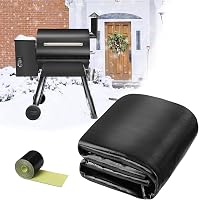
When the smoker isn't in use, cover it. The Esinkin 30-inch cover is sized for 30-inch electric smokers at 18.1 x 16.9 x 30.9 inches.
Its reinforced polyester is built to shrug off dust and UV, which suits a garage that sees sawdust and sunlight. Measure the smoker's height with any stand before buying, since a raised mobility stand makes the unit taller than the cover's 30.9 inches.
How do you monitor a garage cook?
Use a wireless meat thermometer so you can watch temperatures without opening the door. Every door opening releases smoke into the garage and drops the cabinet heat.
The ThermoMaven G1 pairs a wireless probe with a standalone display base. It reads internal meat temperature and ambient cabinet temperature up to 752°F.
Its Sub-1G signal reaches up to 3000 feet in open air, so you can check the cook from inside the house. Accuracy is rated at ±0.5°F across 6 sensors, and the probe is IPX8 waterproof and dishwasher safe.
For a garage cook, the display base means you don't need to stand in the smoke to read temps.
Set a high-temp alert so you catch a flare or a heat spike before the meat suffers.
What should you never do with a garage smoker?
Never run a smoker in a closed garage, and never leave one going while you're asleep or away. These two rules prevent most of the real danger.
Other shortcuts to avoid:
- Don't smoke in a garage with a running car or fuel cans nearby.
- Don't set the smoker on a wooden shelf, carpet or plastic table.
- Don't close the garage door "just for a minute" to keep the smoke out of the house.
- Don't run a long, thin extension cord to reach a distant outlet.
- Don't store hot ashes or spent chips in a plastic bin.
Let the unit cool fully before you cover it or roll it back into a corner. Spent chips can hold heat for hours.
So, can you use an electric smoker in a garage?
Yes, with the garage open to the air and a carbon monoxide alarm in place. If the door has to stay closed or the space can't cross-ventilate, wheel the smoker outside instead.
Set up near the open door, keep fuel and clutter clear and use a wireless thermometer so you don't open the lid. The EAST OAK 30" smoker suits a garage door cook with its waist height and long chip load.
Add the ThermoMaven G1 for remote reads and the Esinkin cover for storage. Then light the chips and keep the air moving.
For your next cook, plan around the weather and the airflow first. A garage extends your smoking season, but only when fresh air does too.
Frequently asked questions
Is it safe to run an electric smoker in a garage?
Only with the garage door and a second opening kept open so air moves through the whole time. A garage without that airflow traps smoke and carbon monoxide, so the alarm and ventilation come first, not last.
How much ventilation does an electric smoker need?
Enough for smoke to leave as fast as it forms. Open the garage door fully and open a second door or window on the opposite side so air crosses the smoker.
If smoke hangs near the ceiling or your eyes sting, the airflow is too low to keep cooking.
Do you need a carbon monoxide alarm for a garage smoker?
Yes. Any smoker that burns wood chips makes carbon monoxide, and a garage can hold it near the floor.
Put a battery-powered carbon monoxide alarm at knee height in the garage and test it before the cook.
Can you smoke meat in a garage if you leave the door shut?
No. A closed garage turns into a sealed box for smoke and carbon monoxide, and the smoker's heat has nowhere safe to go.
Run the smoker outside or with the garage open to the air, and never sleep or leave the house with it going.